texto

Un blog para compartir fotos y aventuras de nuestros peluches NICI. A blog to share photos and adventures of our NICI plushes.

domingo, 15 de mayo de 2011

Don Sheebo de la Mancha - Don Sheebo of La Mancha


"En un lugar de la Mancha, de cuyo nombre no quiero acordarme, no ha mucho que vivía un hidalgo de los de lanza en astillero, adarga antigua, rocín flaco y galgo corredor"... Éstas son las primeras palabras de El Quijote, y nuestro Sheebo quiso conocer los famosos lugares de los que habla el libro. Aquí le podemos ver sentado con Don Quijote
"In a village of La Mancha, the name of which I have no desire to call to mind, there lived not long since one of those gentlemen that keep a lance in the lance-rack, an old buckler, a lean hack, and a greyhound for coursing"... These are the first words of Don Quixote, and our Sheebo wanted to see those famous places described in the book. We can see Sheebo sitting on Don Quixote


El protagonista del libro es Alonso Quijano, un caballero rural retirado, de unos 50 años de edad, que vive en algún lugar de La Mancha con su sobrina y su criada. Se obsesiona con los libros de caballería y decide marchar como un caballero errante en busca de aventuras. Se coloca una vieja armadura y se nombra como "Don Quijote de la Mancha", y nombra a su flaco caballo como "Rocinante". Además, designa a una campesina del lugar, Aldonza Lorenzo, como su amada, llamándola Dulcinea del Toboso, sin que ella sepa nada de ésto.
The protagonist of the book is Alonso Quixano (or Quijano), a retired country gentleman nearing 50 years of age, who lives in an unnamed section of La Mancha with his niece and a housekeeper. He has become obsessed with books of chivalry and decides to go out as a knight-errant in search of adventure. He dons an old suit of armor, renames himself "Don Quixote de la Mancha," and names his skinny horse "Rocinante". He designates a neighboring farm girl, Aldonza Lorenzo, as his lady love, renaming her Dulcinea del Toboso, while she knows nothing about this.


El Toboso, de donde era Dulcinea, su amada
El Toboso, this is the town where his lover, Dulcinea, was from


Éstos son los molinos de viento de Campo de Criptana. Don Quijote luchó contra ellos pensando que eran feroces gigantes.
These are the famous windmills of Campo de Criptana. Don Quixote attacked them because he believed that they were ferocious giants.


Sheebo disfrazado de Sancho Panza, el fiel escudero de Don Quijote
Sheebo dressed as Sancho Panza, the loyal page of Don Quijote


Os gusto más disfrazado de Don Quijote? :)))
Do you prefer me disguised as Don Quixote? :)))


Los molinos de viento son espectaculares. Hay muchos en la región de La Mancha, y algunos se pueden visitar por dentro.
The windmills are spectacular. There are lots of them in the region of La Mancha, and some of them can be visited inside


Ésta es la Plaza Mayor de Tembleque, otro bonito pueblo de La Mancha
This is the main place of Tembleque, another beautiful town of La Mancha


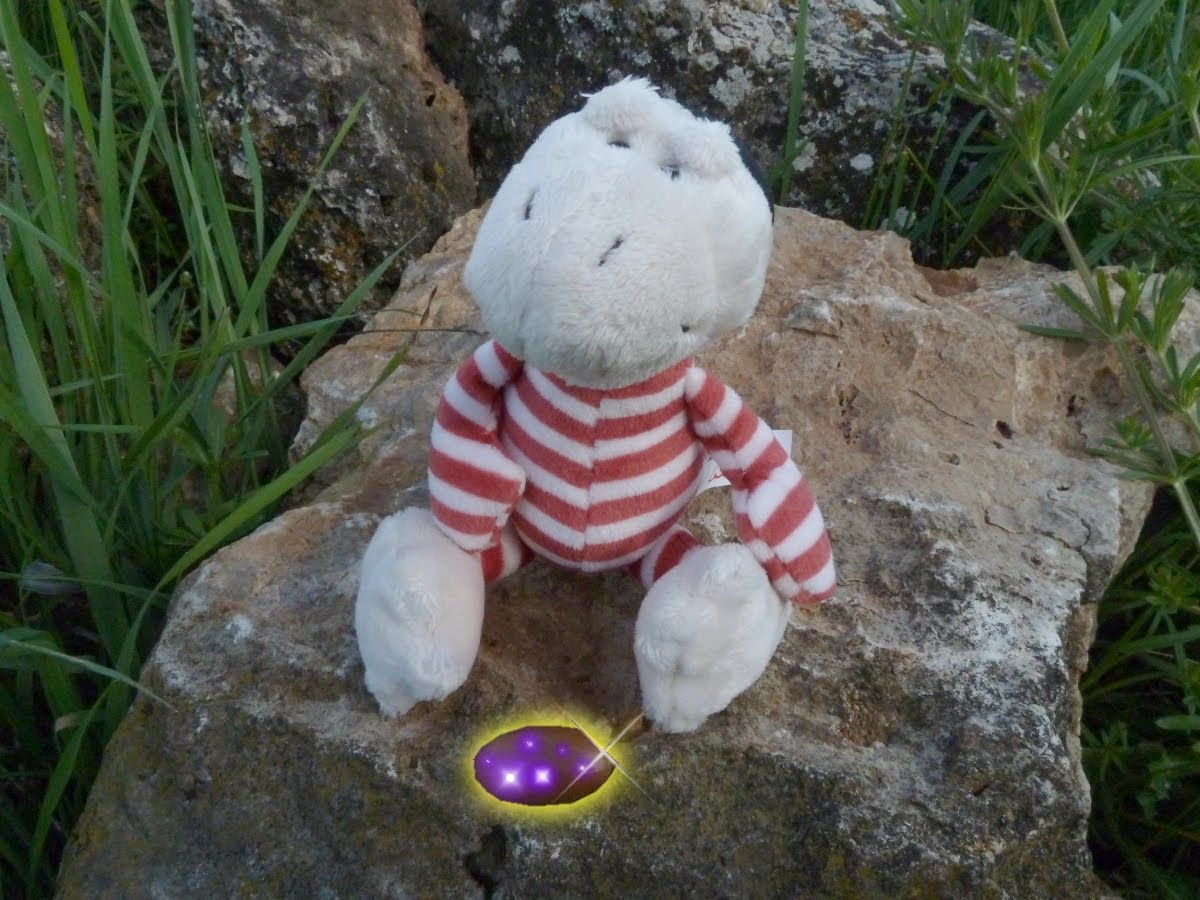
Cuando Sheebo volvió a casa, les trajo un bonito recuerdo a sus amigas :)
When Sheebo returned home, he brought a beautiful souvenir for his friends :)

viernes, 6 de mayo de 2011

Un cuento de piratas (2ª parte) - A pirates tale (2nd part)


La serpiente Cip-Cip era la dueña de la selva, y la guardiana del tesoro, pero siempre estaba enfadada porque no tenía amigos y se aburría mucho
Snake Cip-Cip was the owner of the jungle and the guardian of the treasure, but she was always angry, because she didn't have any friends and she felt bored


Cuando escuchó acercarse a los piratas, rápidamente se dirigió a vigilar su tesoro, ¡por nada del mundo quería que se lo robasen!
When she heard the pirates coming close, she runned fast to watch carefully her treasure, she didn't want to get it stolen!


Mientras tanto, los piratas alcanzaron el tesoro: en realidad era un árbol del tesoro, "Mirad, ya es nuestro, yupiiiiiii!", dijo el León
Meanwhile, the pirates reached the treasure: it was actually a treasure tree, "Look, it is already ours, yippieeeeee!", said the Lion


De repente, entre las ramas del árbol, salió la Serpiente Cip-Cip: "Qué hacéis aquí, queréis robarme mi tesoro?"
Suddenly, between the branches of the tree, Snake Cip-Cip appeared: "What are you doing here, do you want to steal my treasure?"


Los piratas: "Buenos días, Serpiente, no sabíamos que el tesoro era tuyo. Venimos de muy lejos porque hemos oído que este árbol da unos frutos maravillosos, sólo queremos llevarnos uno a nuestro país"
The pirates: "Good morning, Ms. Snake, we didn't know that the treasure was yours. We come from very far away because we have heard about the wonderful fruits of this tree, we only want to take one of them to our country"


La Serpiente: "sí, es verdad. Este árbol da las Bellotas Mágicas de la Felicidad. Si se tiene una y se comparte con los amigos, todos seréis muy felices. Os podéis llevar una a vuestro país, pero a cambio os pido que me llevéis con vosotros, estoy tan aburrida aquí y no puedo compartir mi tesoro con nadie!"
The Snake: "Yes, it is true. This tree gives the Magic Acorns of Happiness. If you have one and you share it with your friends, all of you will be very happy. You can take one to your country, but in exchange, I must ask you to take me with you to your country, I feel so bored here, and I cannot share my treasure with anybody here!"


Gecko cogió la bellota y ya empezó a sentirse mucho más feliz que nunca! "Por supuesto, amiga, vente con nosotros al país de los piratas. Allí te lo vas a pasar muy bien y vas a tener muchos amigos!"
Gecko took the acorn, and inmediately he began to feel more and more happier than never before! "Of course, my friend, come with us to the Pirates Country. You are going to have a very nice time there and you are going to have many friends!"


Así que, los cuatro emprendieron el viaje hacia el lejano País de los Piratas, todos fueron muy felices gracias a la bellota mágica y la Serpiente Cip-Cip tuvo muchos amiguitos y nunca más volvió a sentirse sola
Moraleja: Tener amigos es el mejor tesoro del mundo
....... FIN........
So, the four made the trip back to the Pirates Country, they all were very happy forever after, and Snake Cip-Cip made a lot of friends there and she never felt lonely again
Moral: To have friends is the best treasure of the world
...THE END....

martes, 3 de mayo de 2011

Un cuento de piratas (1ª parte) - A pirates tale (1st part)


Érase una vez tres piratas que decidieron navegar muy-muy lejos y buscar un tesoro. Eran los piratas León, Gecko y Oso
Once upon a time, there were three pirates who decided to sail very-very far away and to search for a treasure. They were Pirate Lion, Pirate Gecko and Pirate Bear


Pirata León: "Ya hemos llegado, adelante!"
Pirate Lion: "We've just arrived, come on, let's go!"


El mapa del tesoro decía que tenían que subir por una montaña muy alta...
Pirata Gecko: "Ufff, esperadme! qué cansado estoy!"
The Treasure map said that they had to climb a very high mountain...
Pirate Gecko: "Arff, wait for me, I'm very tired!"


Los tres tuvieron que atravesar también una frondosa selva... "Seguidme, chicos, ya estamos muy cerca", dijo el Pirata Oso
The three had to cross a leafy jungle... "Follow me, guys, we already are very close to the treasure", said Pirate Bear


De repente, en mitad de la selva, vieron una cueva formada por ramas y hojas, no se dieron cuenta de que 2 ojillos mínimos les observaban atentamente...
Suddenly, in the middle of the jungle, they saw a cave made of branches and leaves, they didn't realize that two minimal eyes were observing them very carefully...

...Era la serpiente Cip-Cip la que les observaba, ella era la dueña de la selva: "No querrán robarme mi tesoro? Hoy estoy de muy mal humor".... CONTINUARÁ
...She was Snake Cip-Cip who was observing them, she was the owner of the jungle: "For their own sake I hope that they don't want to steal my treasure, because I am of very bad mood today".... TO BE CONTINUED

lunes, 25 de abril de 2011

Plasencia: Ciudad del Deleite - Plasencia: City of Delight


De camino a Plasencia, encontramos las ruinas del Templo romano de Augustóbriga. Las vistas son magníficas
On our way to Plasencia, we found the ruins of the Roman temple of Augustóbriga. The views are magnificent


La Catedral Nueva (s. XV y XVI)
The New Cathedral (15th and 16th centuries)


La Catedral Vieja (s. XIII y XIV)
The Old Cathedral (13th and 14th centuries)


Plaza de San Nicolás
San Nicolás Square


Convento de Santo Domingo, hoy es Parador Nacional
Convent of Santo Domingo, nowadays is a National Tourism Inn


Oh noooo, sácanos de aquí, queremos viajar contigo!
Oh nooo, take us out of here, we want to travel with you!


Iglesia de Santo Domingo: hoy se utiliza como exposición de los pasos de la Semana Santa
Santo Domingo Church: nowadays is used to exhibit the Pasos of Holy Week (A Paso [Spanish > "Pace" or "Step"] is an elaborate float made for religious parades)

Los Pasos son llevados por los Costaleros, que habitualmente visten así (Panda tuvo un poquito de miedo)
The Pasos are carried by porters, they usually dress like this (Panda was a little afraid)


La Iglesia de Santo Domingo está rodeada de naranjos
Santo Domingo Church is sorrounded by orange-trees

Las murallas, con 6 puertas y 68 torres, que datan hacia el 1197
The double line of walls, with six gates and 68 towers, dating to 1197


La Casa Consistorial, en la Plaza Mayor, en la torre del campanario se encuentra uno de los símbolos de la ciudad: el Abuelo Mayorga
The Town Hall, in the Main Square. On the tower is placed one of the main symbols of the city: el Abuelo Mayorga


Acueducto romano
Roman aqueduct

Plasencia está situada al norte de la provincia de Cáceres, a unos 245 km al oeste de Madrid. El nombre de Plasencia proviene del lema dado por su fundador el rey Alfonso VIII de Castilla en el escudo otorgado a la misma, esto es: «Ut placeat Deo et hominibus», es decir: «Para que agrade (plazca) a Dios y a los hombres», significa, por consiguiente, «Ciudad de Deleite o de Placer». Es una ciudad con mucha historia y muchos monumentos, que merece la pena visitar.

Plasencia is sited at the north of the province of Cáceres, 245 km west of Madrid. The name of Plasencia comes from the Coat of arms given by King Alfonso VIII of Castilla: "Ut placeat Deo et hominibus", that means: "to please God and the humans", so it means "City of Delight" or "City of Pleasure". It is a city with a lot of history and monuments, worth to visit.

lunes, 18 de abril de 2011

Panda en el Monasterio de Yuste - Panda at Monastery of Yuste

En 1556 Carlos I de España y V de Alemania, se retiró al Monasterio de Yuste (Cáceres) después de abdicar de la corona española en favor de su hijo Felipe II y de la corona del Sacro Imperio Romano en favor de su hermano Fernando I
In 1556 Charles V, Holy Roman Emperor retired to the Monastery of Yuste (Cáceres) after having abdicated the Spanish crown in favour of his son Philip II of Spain and the crown of the Holy Roman Empire in favour his brother Ferdinand I

El monasterio se amplió en 1556 para poder albergar al emperador y a los 50 ó 60 miembros de su séquito
The monastery was expanded in 1556 to make room for the emperor and the 50 or 60 members of his entourage.

A menudo iban a visitarlo personajes muy conocidos, incluyendo su hijo ilegítimo Don Juan de Austria, y su heredero, Felipe II
From time to time, well-known people, including his illegitimate son Don Juan of Austria, as well as his heir Philip II of Spain, came to visit the retired emperor

Carlos V sufrió de graves ataques de gota, y murió de malaria el 21 de septiembre de 1558, debido a una picadura de mosquito, que posiblemente provenía de este lago artificial
Charles V suffered, however, from a severe case of the gout and died of malaria on September 21, 1558, due to a mosquito bite, probably coming from this artificial lake

Durante la Guerra de la Independencia, el monasterio fue destruido y quedó en ruinas hasta 1949, en que el gobierno español lo restauró. El área alrededor de Yuste, el Valle del Jerte, es un destino eco-turístico. Los visitantes pueden ver el monasterio, incluido los apartamentos del rey. El valle también es conocido por sus cerezos y por la belleza de su paisaje.
During the Spanish War of Independence, the monastery was burnt to the ground. It was left in ruins until 1949, when the Spanish government restored it. The area around Yuste, the Valley of the Jerte, is now an eco-tourist destination. Tourists can visit the monastery, including the emperor's apartments. The valley is also known for its cherry trees and the beauty of the surrounding landscape.

Ya sabéis que a nuestros peluches Nici les encanta hacer turismo y visitar lugares con historia. Esta vez Panda fue a visitar el Monasterio de Yuste. Esperamos que os gusten las fotitos y que disfrutéis con la entrada :)

You already know that our Nici plushies love to do tourism and to visit historic places. This time Panda visited the Monastery of Yuste. We hope you will like the pics and enjoy this post :)

domingo, 10 de abril de 2011

Trujillo: tierra de conquistadores - Trujillo: land of conquerors

Trujillo se encuentra en la provincia de Cáceres (región de Extremadura)
Trujillo is located in the province of Cáceres, in the Extremadura region


Algunos Trujillanos marcharon a América a descubrir nuevas tierras.
Some Trujillanos went to America to discover new places.


Cuando regresaron los conquistadores, construyeron magníficos palacios cerca de la Plaza Mayor y alrededores, la mayoría de ellos son visitables hoy en día.
When the conquerors came back, they built majestic palaces near the Plaza Mayor and surrounds, most of them can be visited today.


Ésta es la casa de Francisco de Orellana (siglo XV), conquistador del Amazonas.
This his Francisco de Orellana's house (15th century), who was the conqueror of the Amazonas River.


Monumento a Francisco de Orellana
Monument of Francisco de Orellana


Iglesia de Santa María (siglo XIII)
Church of Santa María (13th century)


Subiendo a la torre de la Iglesia, estoy muy cansado!!!
Going up to the tower of the Church, I'm very tired!!!


Casa de Francisco Pizarro, conquistador del Perú
Francisco Pizarro's house, he was the conqueror of Perú


El Castillo, antigua fortaleza Árabe
The Castle, old arab fortress


Big El conquistando el castillo :)
Big El conquering the castle :)


Desde el castillo, las vistas son magníficas
From the castle, the view is magnificent


La campana del castillo: Dong-dong!
The bell of the castle: Dong-dong!


Vista de Trujillo
General view of Trujillo


Estatua ecuestre de Francisco Pizarro, en la Plaza Mayor
Equestrian statue of Francisco Pizarro, in the Plaza Mayor (main square)


La Plaza Mayor, de estilo renacentista, es el lugar más conocido de la localidad
The Plaza Mayor, built in a renacentist style, is the most famous place of Trujillo

A nuestro amigo Big El, como buen león que es, le gusta conquistar nuevos lugares, así que viajó a Trujillo, famosa ciudad porque fue el lugar de nacimiento de Pizarro y de Orellana, para conocerla. Le gustó tanto que ha prometido volver algún día :)

Our friend Big El, who is a very brave lion, likes conquering new places, so he went to visit Trujillo, a very famous town best known for being the birthplace of Pizarro and Orellana. He liked it so much, so he has decided to come back some day :)

viernes, 1 de abril de 2011

Nos han dado un premio!!! - We have been awarded!!!


Mi amiga Jenny, del blog Niciada nos ha dado un premio! Muchas gracias :))))
My friend Jenny, from Niciada blog has given us an award! Thank you very much :)))

Ahora tengo que contestar a unas preguntas
Now I have to answer these questions:

1. Colocar el premio y quién te lo otorgó en una entrada del blog: JENNY :)
1. Show the award and tell us who gave it to you: JENNY :)

2. Poner por qué te gusta todo lo kawaii y lo cute: PORQUE EN EL FONDO SOY MUUUUY ROMÁNTICA :)
2. Why do you like "Kawaii" and cute stuff: BECAUSE I AM VERY ROMANTIC :)

3. Poner por qué has creado tu blog: PORQUE ESTOY ENAMORADA DE MI COLECCIÓN DE NICIS Y QUERÍA COMPARTIRLO CON TODOS VOSOTROS
3. Why have you created your blog: BECAUSE I LOVE MY NICI COLLECTION AND I WANTED TO SHARE IT WITH ALL OF YOU

4. Entregar este premio a otros blogs: OS LO ENTREGO A TODOS VOSOTROS PORQUE TENÉIS UNOS BLOGS PRECIOSOS!!
4. Give your award to other blogs: I GIVE IT TO ALL OF YOU, BECAUSE YOU HAVE VERY BEAUTIFUL BLOGS!!!